
Kislev arrives in the stillness of winter’s darkness, when the days grow short and the nights are long and cold. Yet within this stillness lies a quiet invitation—to deepen our faith, trust, and resilience. These dark nights, echoing the shadows of our history, whisper of hope and remind me of Anne Frank’s luminous words:
“Look at how a single candle can both defy and define the darkness.”
There is something profoundly comforting about a candle glowing against the cold—a simple light that holds both warmth and promise. This is the essence of Chanukah, which shines in the heart of Kislev, when we kindle flames to dispel the darkness and awaken our inner light and faith. Each year, as Kislev returns, I pause to reflect on the challenges and blessings in my life, drawing strength from its resilient energy and from the steady faith that Hashem’s light is always near, even if I can’t always feel it.
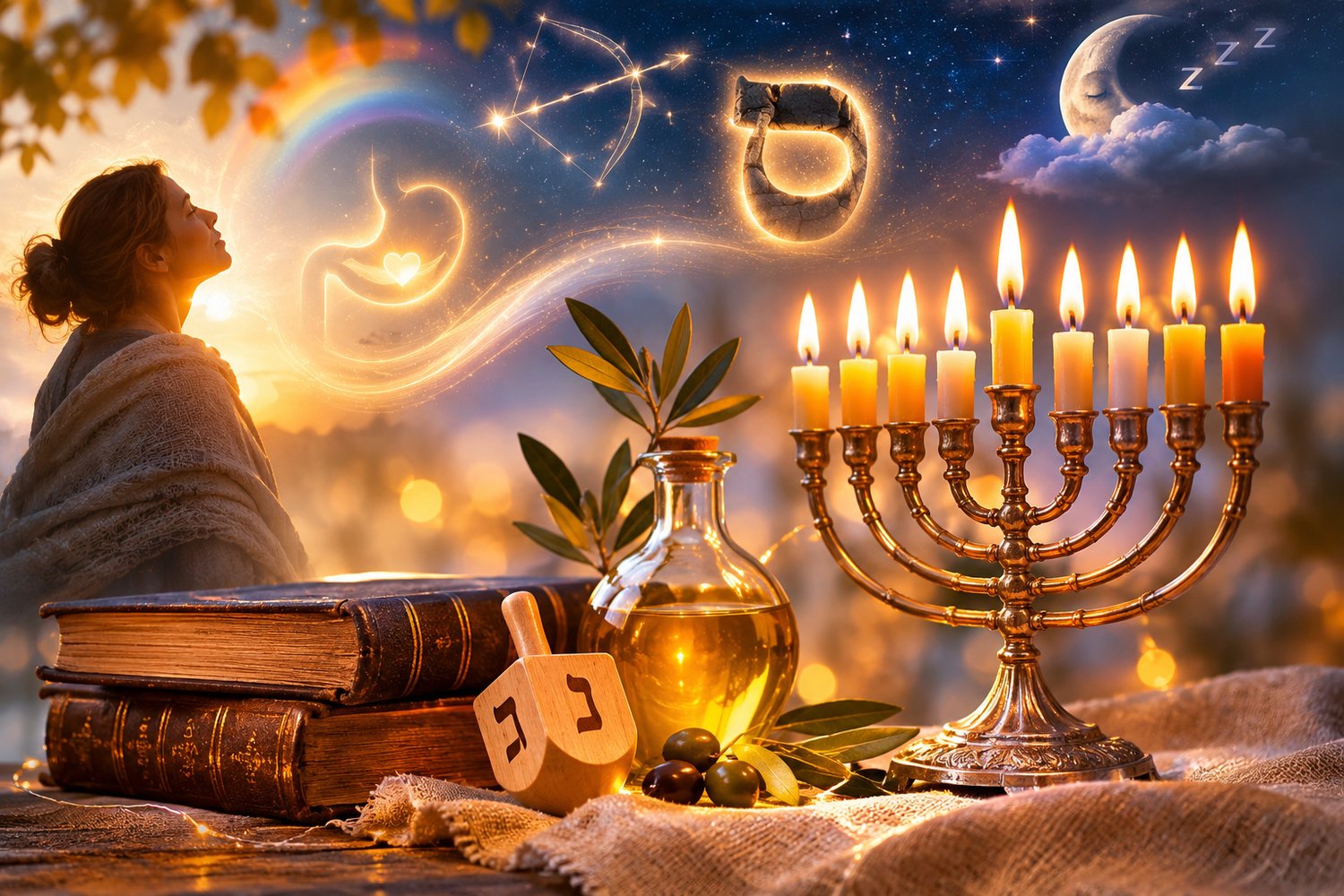
According to Sefer Yetzirah, each Hebrew month carries a unique energy expressed through a letter, a tribe, a zodiac sign, a body part, and a human sense. Kislev, the ninth month, inspires us with themes around faith, trust, and resilience.
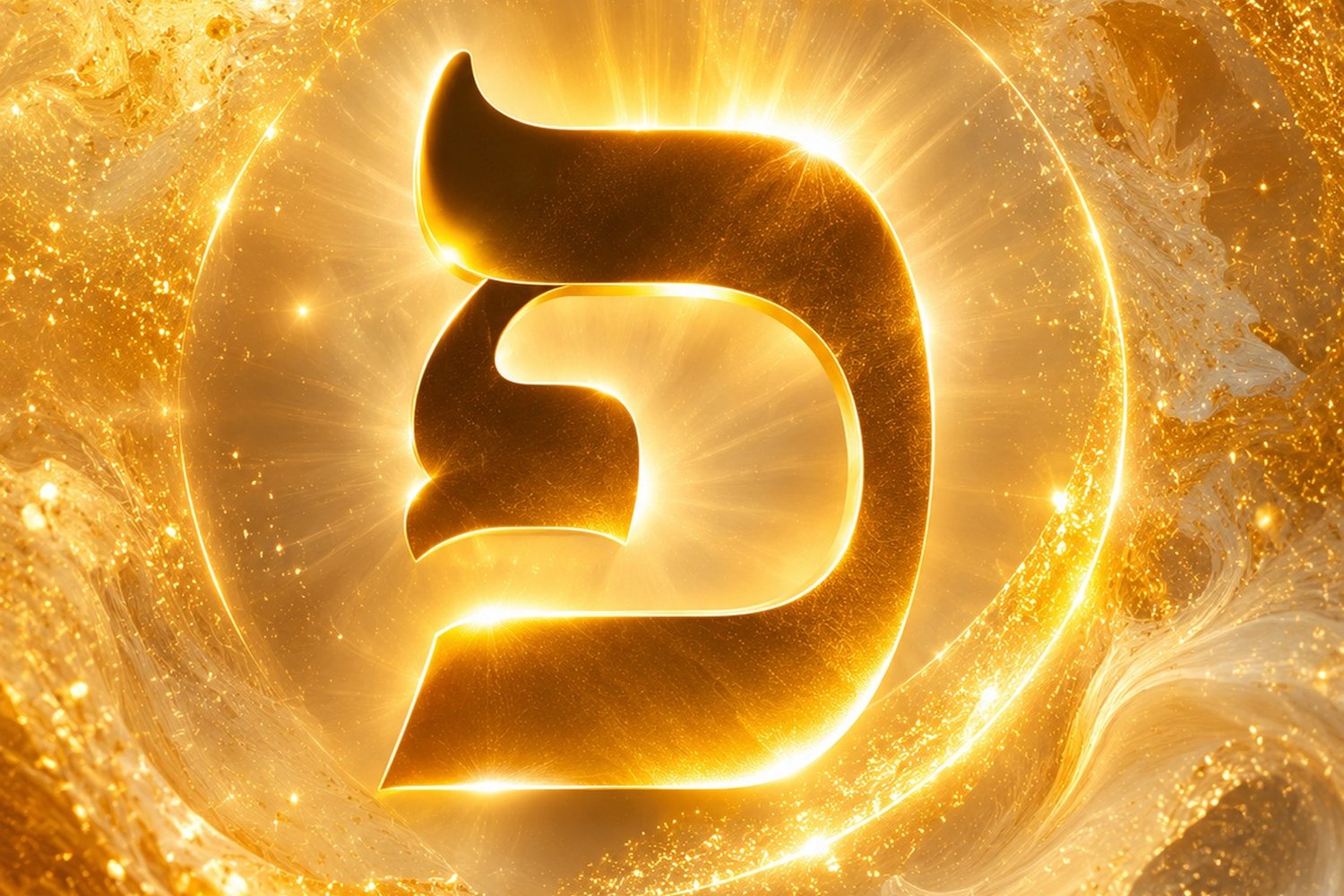
- Kislev’s letter: Samech (ס) means “support,” recalling the verse from Tehillim (145:14): “God supports (ְסוֹמֵך) all the fallen.”
- Its tribe: Benjamin, beloved of God and whose territory was designated as home to the Temple, embodying both trust and rest: “Between his shoulders He rests.” (Deuteronomy 33:12)
- Its zodiac sign: Sagittarius, with the bow (keshet)—both the rainbow of divine promise and the archer’s bow of the Maccabees, symbolizing courage and trust.
- The body part: The stomach, representing intuition—a “gut knowing” that perceives truth beyond intellect.
- Its sense: Sleep, the deep rest that comes only from faith in God’s providence: “And you shall lie down without fear.” (Leviticus 26:6)
Together, these symbols reveal Kislev as a time to lean into Divine support, awaken courage, and discover that healing and light can be found within darkness. How fitting, then, that Chanukah begins in Kislev—a month filled with depth that goes way beyond doughnuts!
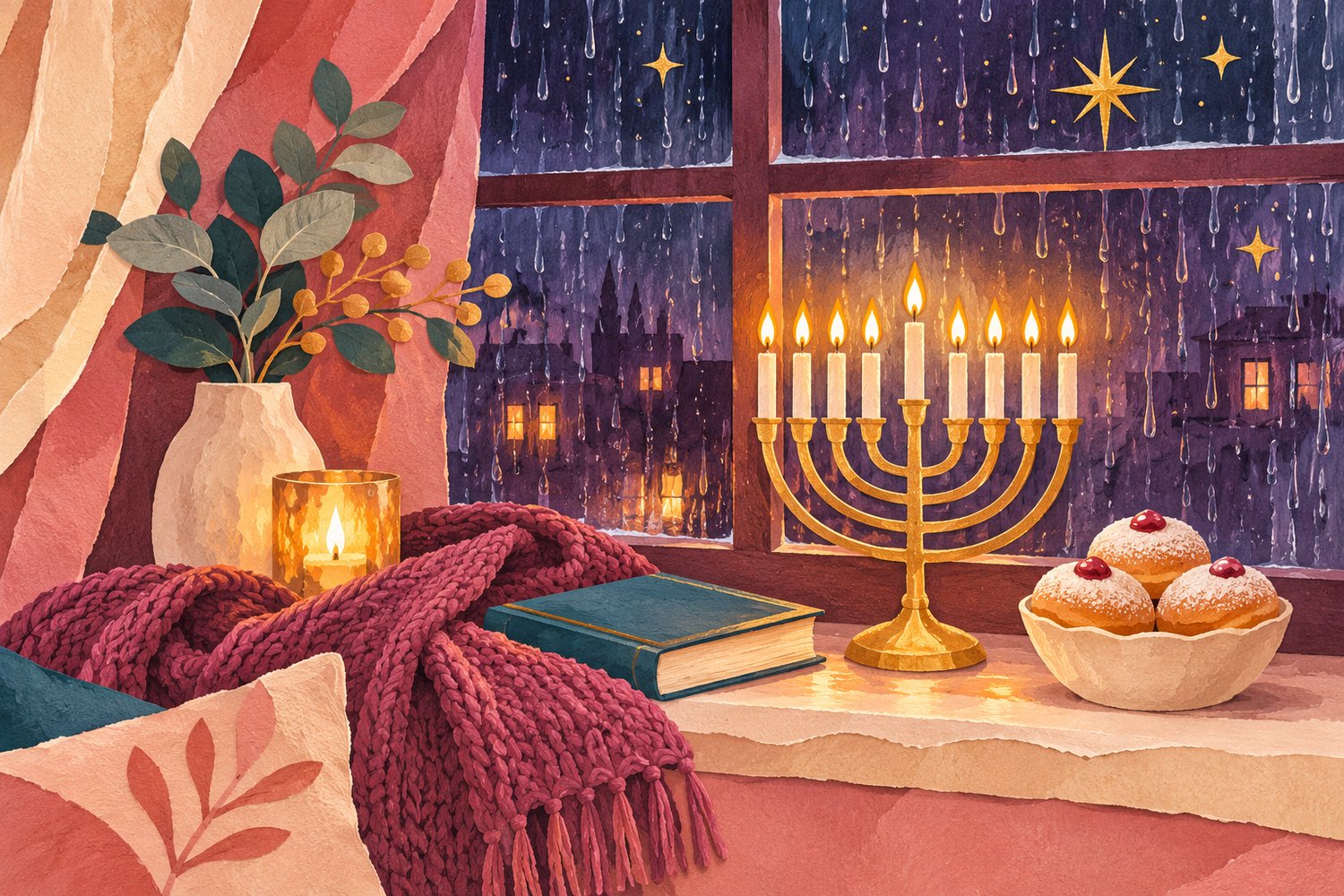
Chanukah is a time when we prevailed against the mighty Greek army, light shone through darkness, and the miracle of oil illuminated the Temple for eight days. Beyond history, Chanukah serves as a spiritual guide, inviting us to discover resilience, deepen faith, and awaken the hidden healing spark within. Just as Hashem safeguarded the tiny flask of pure oil, He guards a spark of wholeness inside each of us, waiting to be uncovered, renewed, and kindled.
The miracle was not only that the oil lasted eight days, but that pure oil was found at all—hidden and preserved by an unknown Kohen. His nameless act teaches us that even small, unseen efforts can ripple outward, resulting in miracles. So too, as women, we daily perform countless unnoticed actions, like this Kohen, that sustain those around us—often not realizing the big impact we have.
The number eight, central to Chanukah, points us beyond the natural cycle of seven. Seven represents the physical order of creation (seven days of the week), while eight signifies transcendence (Brit Mila on the eighth day)—the eternal. The Hebrew word for eight (שמונה) shares roots with שמן (oil) and נשמה (soul), both reminders that the essence of Chanukah is about rising above the ordinary and touching our soul within.
Lighting the Chanukah candles is more than a commemoration. The Holy Arizal, Kabbalist Rabbi Yitzchak Luria taught that the 613 mitzvot correspond to the 613 parts of the body, each bringing healing to its respective part. Though not among the 613 mitzvot from the Torah, this mitzvah nourishes the whole body and soul, infusing Divine light into our being. The timing of the candle-lighting is also significant. As night falls, we strike a flame, bringing light into the darkness.
Perek Shira teaches us that everything in creation has a purpose—for us to learn something from it. Daylight teaches about kindness and clarity of vision, while night teaches about faith in the dark where we don’t see clearly. (Tehillim 92): להגיד בבקר חסדך ואמונתך בלילות — “To declare Your kindness in the morning and Your faithfulness at night.” Life, too, alternates between clarity and confusion, joy and challenge. Chanukah reminds us that even in difficulty, holiness emerges where we least expect it. By attuning ourselves to this rhythm, we learn to uncover hope in adversity and strength in vulnerability, as the Maccabees did when they were few in number and fought anyway.
I was privileged to hear Omer Shem Tov (rescued hostage after 505 days) speak. He said that during his captivity, there was a stretch of 50 continuous days in which he was submerged in darkness, kept in a small space in a tunnel where he could not even stand up or stretch his arms. In these 50 dark days, he said he felt tremendous spiritual light around him.
Rabbi Yaacov Haber notes that light often appears precisely where it is least expected. The Maccabees, few in number, overcame mighty forces. Their courage demonstrates that faith and persistence can transform impossible circumstances. Fire itself offers the same lesson: it always rises upward; it defies gravity, no matter how small. So too, the Jewish people have persisted through exiles and persecution, rising up resiliently time and again—just as we are currently doing now.
Chanukah is thus not only a story of ancient victory, but a living reminder that our smallest acts of faith matter, and that once again, we rose up with resilience when there was little hope. This Kislev, may we allow the light of Chanukah to enter our own darkness, and extend to all those in Am Yisrael who have suffered greatly.
May we draw strength from the hidden spark Hashem has placed within each of us, finding healing in body, mind, and neshama. And may we share that light outward, illuminating not only our homes, but the world around us.
 Devorah Kur is a Logotherapist, SEP, IFS Level 3 practitioner, and Bereavement Counselor, who guides people through illness, grief, and trauma. Author of Man’s Search for Healing,
Available via Amazon , she weaves meaning, resilience, and post-traumatic growth into her work. At her Ra’anana Integrative Wellness clinic, she offers in-person and online sessions supporting healing of mind, body, and soul. Visit dkwellness.co.il
Enjoyed this article?
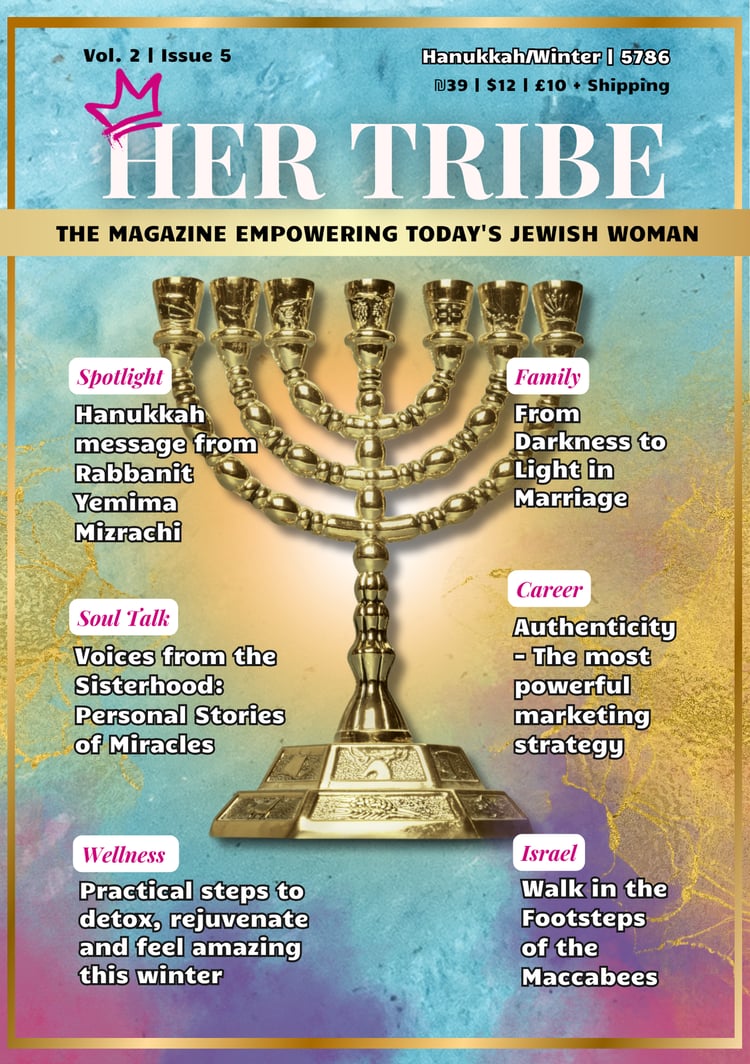
This article originally appeared in Her Tribe Magazine | Chanukah 5786.
Continue reading inspiring stories, Jewish wisdom, personal journeys and meaningful conversations in the complete edition.

Comments ()